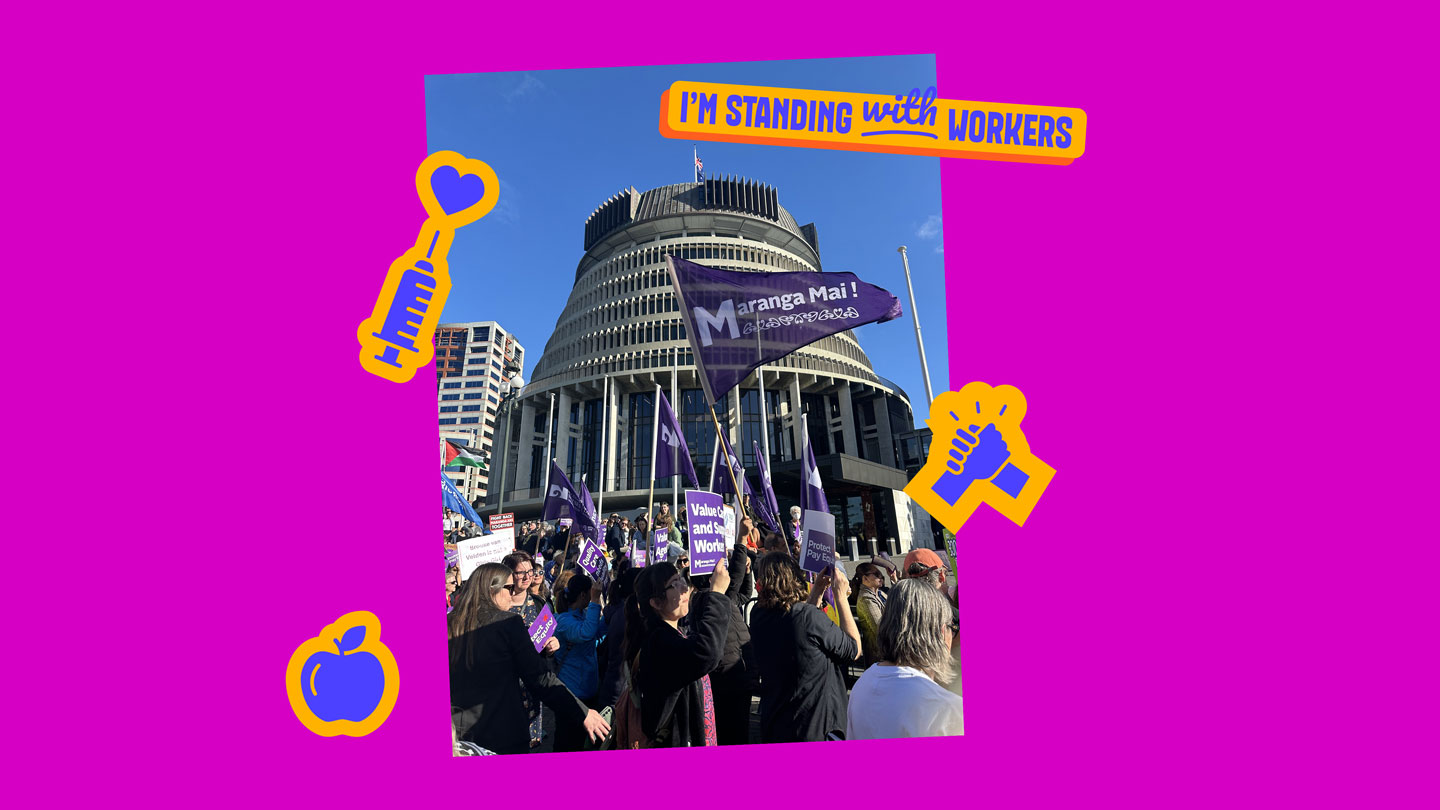
On Thursday 23 October, tens of thousands of educators and health workers will take part in a ‘mega strike’ action estimated to be the biggest strike in years, with around 100,000 workers expected to participate.
Why strike?
Striking is a last resort action, one that takes a lot of organisation and consideration:
- In New Zealand, a strike can only happen if a union and employer have been in collective bargaining for more than 40 days.
- Unions must give written notice of the intention to strike (within 28 days for essential services).
- Workers who strike may be suspended without pay.
The October 23 mega-strike brings together workers from across Aotearoa’s health and education sectors in a rare show of collective action.
Education:
- 40,000 NZEI Te Riu Roa members, including primary school teachers, primary principals, school support staff, and Ministry of Education specialist staff
- 19,700 secondary school teachers covered by the PPTA Secondary Teacher’s collective agreement.
Health:
- 36,000 nurses, midwives and health care assistants represented by the New Zealand Nurses Organisation,
- 11,500 Allied Health workers ( including social workers, physiotherapists, occupational therapists, scientists and anaesthetic technicians) and 3,500 mental health and public health nurses and mental health assistants represented by the Public Service Association
- 4000 doctors and dentists represented by the Association of Salaried Medical Specialists
- 1,700 back office health workers under the PAKS (Policy, Advisory, Knowledge and Specialist Workers) collective agreement, covering areas like business support, communications and procurement.
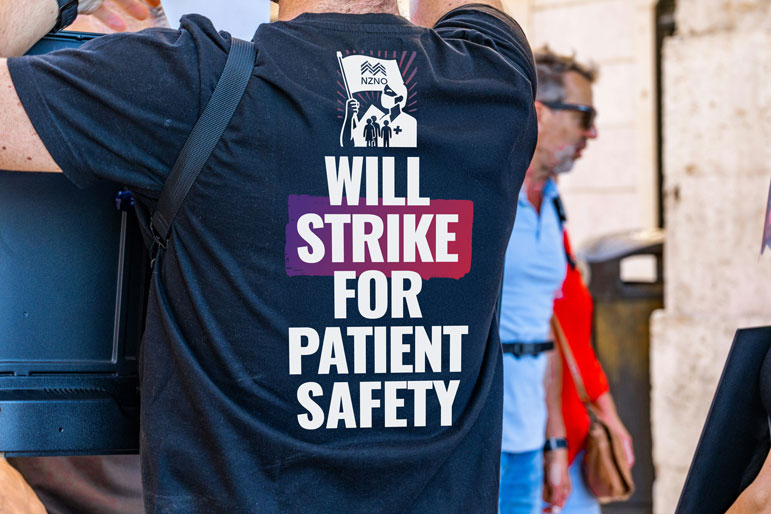
Because of the strike, many parents will also need to take time off work, and many other public services will be limited. This coordinated action will cause disruption and have a big impact. But it wouldn’t be happening if there wasn’t so much at stake.
The mega strike is taking place because public sector workers are calling for fair pay, safe staffing, and properly resourced public services. As part of the coalition government’s pledge to slash public spending, by December 2024 around 9,500 public service jobs were cut or disestablished according to RNZ’s reporting. Back-office and service cuts don’t just stay ‘behind the scenes’. The cuts have had ripple effects, reducing capacity and support where it’s needed most in schools, health and community services.
In the health sector, chronic understaffing and slow recruitment have left nurses, midwives, doctors, and allied-health workers stretched thin, often working unsafe hours. Many are leaving Aotearoa for better pay and conditions overseas, worsening shortages and putting both staff and patients at risk.
In education, teachers are being offered pay increases that fail to keep up with current and projected rates of inflation, while growing student needs and staffing shortfalls are putting additional pressure on schools. In February this year, the Ministry of Education announced a shortfall of 1250 teachers nationwide.
Unfair pay, unsafe working conditions and under-resourced services leave us all worse off.
This is a big deal
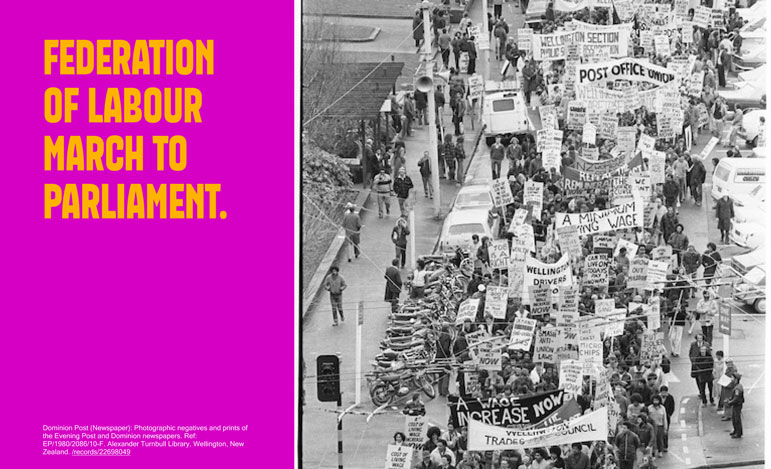
We don’t see mass strike action like this happen very often. In fact, we haven’t seen a coordinated effort like this since 1979 when approximately 300,000 workers took part in a general strike called by the Federation of Labour. Like today, that strike was a response to living costs and government attempted to limit wage growth. Workers took collective action to defend fair pay and living standards, and succeeded in forcing the repeal of the Rumuneration Act, which had allowed the government to override negotiated wage increases.
These days, as our economy has shifted toward services, casual and contract work, and smaller workplaces, fewer New Zealanders belong to a union, and that has reduced workers’ collective organising power.
As Marshall Ganz describes it, organising is, “leadership that enables people to turn the resources they have into the power they need to make the change they want.” For most workers labour is their most powerful resource.
By striking, workers are not only exercising power to stand up for themselves, they’re standing for all of us, and for the public services that support our collective wellbeing.
We’ve created a digital tool that you can use to show your support on October 23. Join with us in standing with the people who are standing up for us.